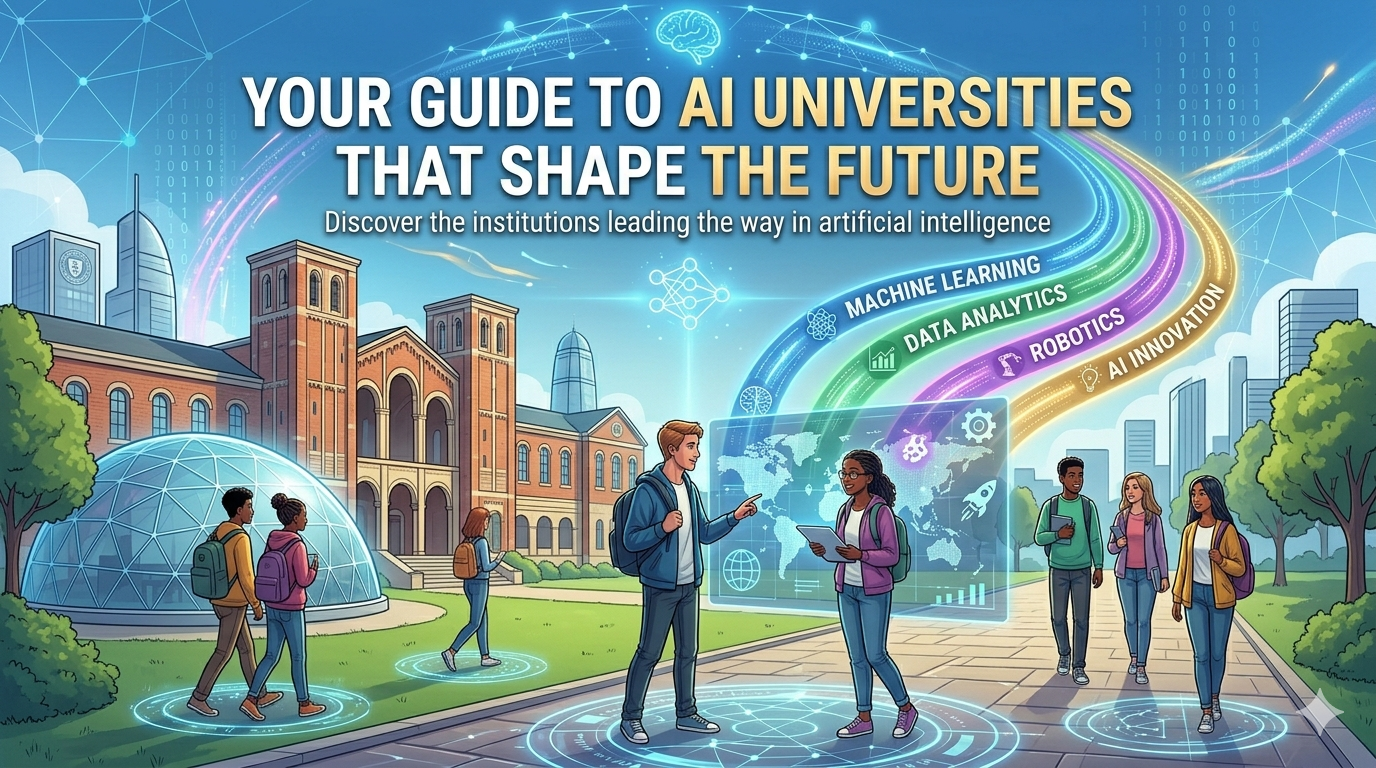
Artificial Intelligence (AI) is rapidly transforming the world. From smart home devices and digital assistants to self-driving cars and advanced healthcare systems, AI technologies are influencing nearly every industry. As the global demand for AI professionals continues to grow, universities are evolving to provide specialized education that prepares students for this technological revolution.
For students planning their academic journey, choosing the right university can be one of the most important decisions they make. Institutions that focus on artificial intelligence, data science, and advanced computing are shaping the next generation of innovators. This guide will help students understand what makes an AI-focused university valuable and how to choose the best one for their future.
The Growing Importance of AI Education
Artificial intelligence has become one of the most powerful technologies of the modern era. Businesses, governments, and research institutions are investing heavily in AI because of its ability to analyze massive datasets, automate processes, and generate insights that improve decision-making.
As a result, universities worldwide are introducing specialized programs designed to train students in AI-related fields. These programs often combine computer science, mathematics, statistics, and engineering to create a strong foundation for students who want to work in cutting-edge industries.
AI education is no longer limited to research institutions or postgraduate programs. Many universities now offer undergraduate degrees focused on artificial intelligence, machine learning, robotics, and data analytics. This expansion allows students to start building their AI expertise earlier in their academic careers.
What Makes an AI University Stand Out
Not all universities offer the same quality of AI education. Some institutions provide advanced research opportunities, while others focus on practical training and industry collaboration. When choosing an AI university, students should evaluate several key factors.
1. Comprehensive AI Curriculum
A strong AI program should include courses that cover essential technologies such as machine learning, deep learning, neural networks, natural language processing, and computer vision. These subjects help students understand how intelligent systems are designed and implemented.
Universities that regularly update their curriculum to reflect the latest technological developments help ensure students remain competitive in the evolving job market.
2. Research and Innovation Opportunities
Artificial intelligence is constantly evolving, and universities play a major role in driving innovation. Institutions with dedicated AI research labs and centers give students the chance to work on groundbreaking projects.
Students may participate in research involving robotics, smart healthcare systems, climate analysis, or autonomous technologies. These experiences allow students to develop advanced problem-solving skills and contribute to technological progress.
3. Industry Collaboration
AI universities that partner with technology companies provide valuable opportunities for students to gain real-world experience. Industry collaboration often includes internships, mentorship programs, and joint research initiatives.
These partnerships allow students to learn directly from professionals working in the tech industry and gain practical experience before entering the job market.
4. Experienced Faculty
Faculty expertise is another critical factor when choosing an AI-focused university. Professors who are actively involved in research or have industry experience can provide valuable insights into emerging technologies.
Experienced instructors help students understand both the theoretical and practical aspects of artificial intelligence, making the learning experience more meaningful.
5. Advanced Technology Infrastructure
Artificial intelligence development requires access to powerful computing resources, specialized software, and large datasets. Universities that invest in modern laboratories and high-performance computing facilities create better environments for AI education.
These resources allow students to experiment with machine learning models, develop intelligent applications, and conduct advanced research.
The Importance of Hands-On Learning
In the field of artificial intelligence, practical experience is just as important as theoretical knowledge. Universities that emphasize project-based learning help students build real-world skills.
Students may work on projects such as creating chatbots, building recommendation systems, designing predictive analytics tools, or developing robotic applications. These projects help students understand how AI technologies are applied in real-world scenarios.
Hackathons, coding competitions, and innovation challenges are also common at leading AI universities. These events encourage creativity, teamwork, and problem-solving while exposing students to new technologies and ideas.
Global Opportunities in AI Education
Many AI-focused universities offer international collaboration opportunities. Students may participate in exchange programs, joint research projects, or global internships. These experiences provide exposure to different academic systems and technological environments.
Global exposure is especially valuable in the AI industry, which operates across borders and requires collaboration between researchers and companies worldwide.
Career Opportunities After Studying AI
Graduates from AI universities have access to a wide range of career opportunities. Many industries are actively seeking professionals with expertise in artificial intelligence and data science.
Some popular career paths include:
- Artificial Intelligence Engineer
- Machine Learning Engineer
- Data Scientist
- Robotics Engineer
- AI Research Scientist
- Software Developer specializing in AI
These roles often offer strong career growth, competitive salaries, and the opportunity to work on innovative technologies that shape the future.
Preparing for an AI-Focused Education
Students interested in studying artificial intelligence should start building strong foundations in mathematics, programming, and logical thinking. Learning programming languages such as Python and understanding basic statistics can provide a solid starting point.
Curiosity, creativity, and a willingness to experiment with new technologies are also important traits for students pursuing careers in AI.
Conclusion
Artificial intelligence is transforming the world at an incredible pace. Universities that focus on AI education are preparing students to lead this technological revolution. By offering advanced research opportunities, strong academic programs, modern infrastructure, and industry partnerships, these institutions help shape the future of technology.
Choosing the right AI university is a crucial step for students who want to build successful careers in the digital age. With the right education and dedication, today’s students can become tomorrow’s innovators, engineers, and technology leaders.
The future of artificial intelligence is being built today—and the universities that embrace this transformation are helping students become the pioneers who will shape the world of tomorrow. 🤖🎓🚀