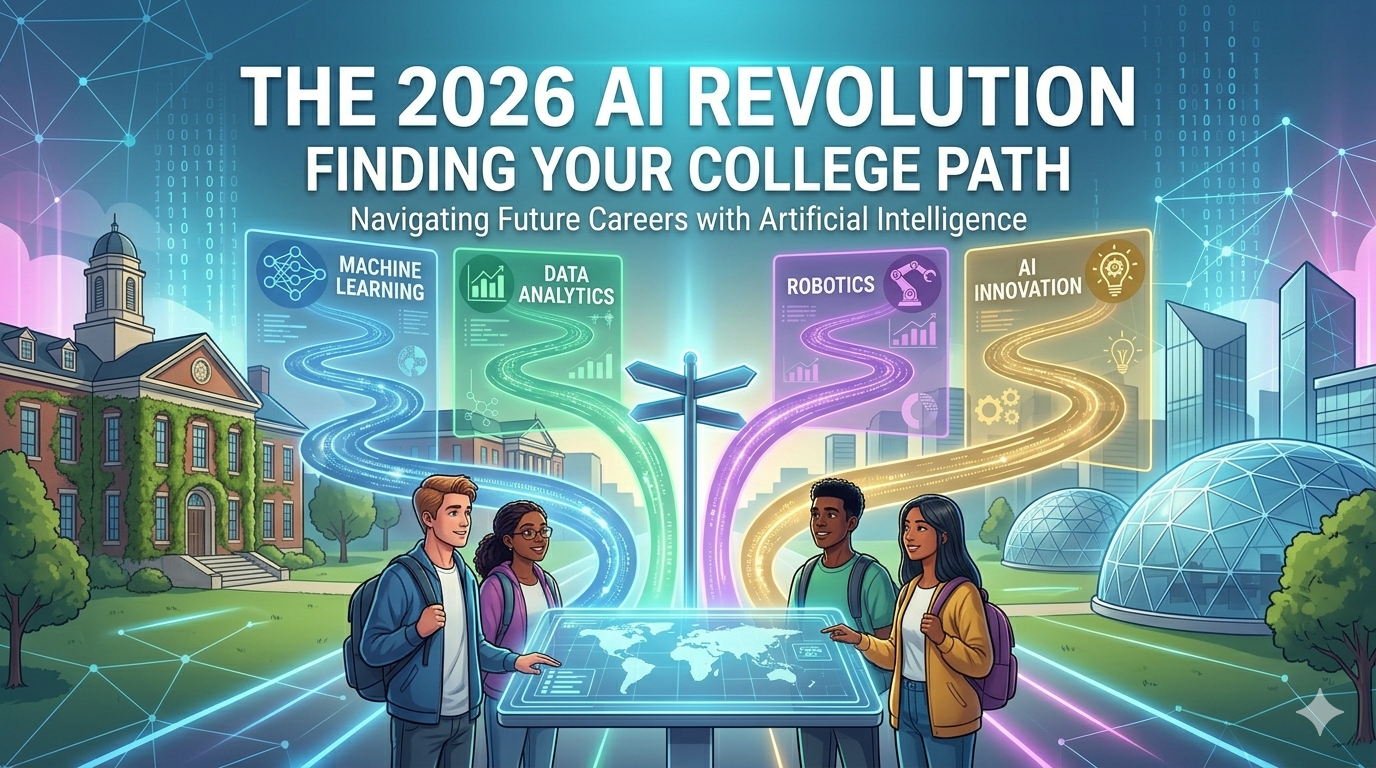
The year 2026 represents a turning point in the global technology landscape. Artificial Intelligence (AI) is no longer just a concept discussed in research labs—it has become a powerful force shaping industries, economies, and everyday life. From intelligent healthcare systems and autonomous vehicles to advanced financial analytics and smart cities, AI is transforming how the world works.
As this technological revolution accelerates, students around the globe are facing an important question: How can they prepare for a future dominated by AI? One of the most important steps is choosing the right college path. The university and program a student selects can play a critical role in shaping their knowledge, skills, and career opportunities in the AI-driven world.
Understanding the AI Revolution
Artificial Intelligence refers to computer systems that can perform tasks that normally require human intelligence. These tasks include learning from data, recognizing patterns, understanding language, making decisions, and solving complex problems.
Over the past decade, AI technologies have advanced rapidly due to improvements in computing power, access to massive datasets, and breakthroughs in machine learning algorithms. Today, AI is used in many industries such as healthcare, banking, education, transportation, agriculture, and cybersecurity.
For example, AI-powered systems help doctors detect diseases earlier, assist banks in identifying fraud, improve online recommendation systems, and optimize supply chains for global businesses. Because of these applications, companies are actively searching for skilled professionals who can design, build, and manage AI systems.
Why AI Education Matters in 2026
As AI continues to grow, universities are expanding their academic programs to meet the increasing demand for skilled professionals. Many institutions now offer specialized degrees in artificial intelligence, data science, machine learning, robotics, and computer engineering.
Students who pursue these programs gain valuable technical skills such as programming, data analysis, algorithm development, and system design. These skills are highly valuable in the modern job market.
However, not all universities provide the same level of education or opportunities. Some institutions focus heavily on theoretical learning, while others emphasize practical experience and real-world projects. Choosing the right college path can significantly impact a student’s ability to succeed in the AI industry.
Choosing the Right College Program
When selecting a university for AI-related studies, students should carefully evaluate several factors to ensure they receive the best education possible.
1. Strong Academic Programs
A good AI-focused college should offer a comprehensive curriculum covering subjects like machine learning, deep learning, neural networks, computer vision, natural language processing, and data science. These topics form the foundation of artificial intelligence.
A strong curriculum not only teaches the theory behind AI but also allows students to apply these concepts through practical assignments and projects.
2. Research and Innovation Opportunities
Artificial Intelligence is an evolving field where research plays a crucial role in innovation. Universities with active research centers and laboratories provide students with opportunities to participate in cutting-edge projects.
Working on research initiatives allows students to explore new ideas, experiment with emerging technologies, and contribute to advancements in the field.
3. Access to Modern Technology
AI development requires powerful computing systems, specialized software tools, and large datasets. Universities that invest in modern technology infrastructure create better learning environments for students.
Access to advanced computing resources allows students to train machine learning models, develop intelligent applications, and conduct complex experiments.
4. Industry Connections and Internships
Strong connections between universities and technology companies can greatly benefit students. Institutions that partner with leading tech companies often provide internship programs, guest lectures, and collaborative projects.
Internships give students the opportunity to work on real-world problems, gain professional experience, and build valuable industry connections before graduation.
5. Skilled and Experienced Faculty
Professors and instructors play a vital role in shaping a student’s learning experience. Universities with faculty members who specialize in AI research or have industry experience can offer deeper insights into the field.
Learning from experienced mentors helps students understand how theoretical knowledge translates into practical solutions.
The Role of Practical Learning
In the AI revolution, practical skills are just as important as academic knowledge. Universities that encourage project-based learning allow students to develop real-world solutions using AI technologies.
Students may work on projects such as creating chatbots, building recommendation systems, developing predictive analytics models, or designing robotic systems. These hands-on experiences help students build confidence and strengthen their technical abilities.
Participating in hackathons, coding competitions, and AI workshops also helps students sharpen their skills and collaborate with other innovators.
Career Opportunities in the AI Era
The demand for AI professionals continues to grow across multiple industries. Graduates with expertise in artificial intelligence can pursue careers such as:
- AI Engineer
- Machine Learning Engineer
- Data Scientist
- Robotics Engineer
- AI Research Scientist
- Software Developer specializing in AI
These roles often offer strong job security, competitive salaries, and opportunities to work on groundbreaking technologies.
Planning for a Future in AI
Students interested in artificial intelligence should begin preparing early by developing strong foundations in mathematics, programming, and logical thinking. Learning languages such as Python and understanding data analysis techniques can provide a strong starting point.
In addition to technical skills, creativity and problem-solving abilities are also essential for success in the AI field.
Conclusion
The AI revolution of 2026 is opening exciting opportunities for students who are ready to embrace the future of technology. Artificial intelligence is transforming industries, creating new careers, and reshaping the global economy.
Choosing the right college path is one of the most important decisions students can make in this rapidly changing landscape. By selecting a university that offers strong AI programs, research opportunities, industry partnerships, and modern technology resources, students can build the knowledge and skills needed to thrive in the AI era.
With the right education and dedication, the next generation of students can become the innovators and leaders who shape the future of artificial intelligence. 🤖🎓🚀