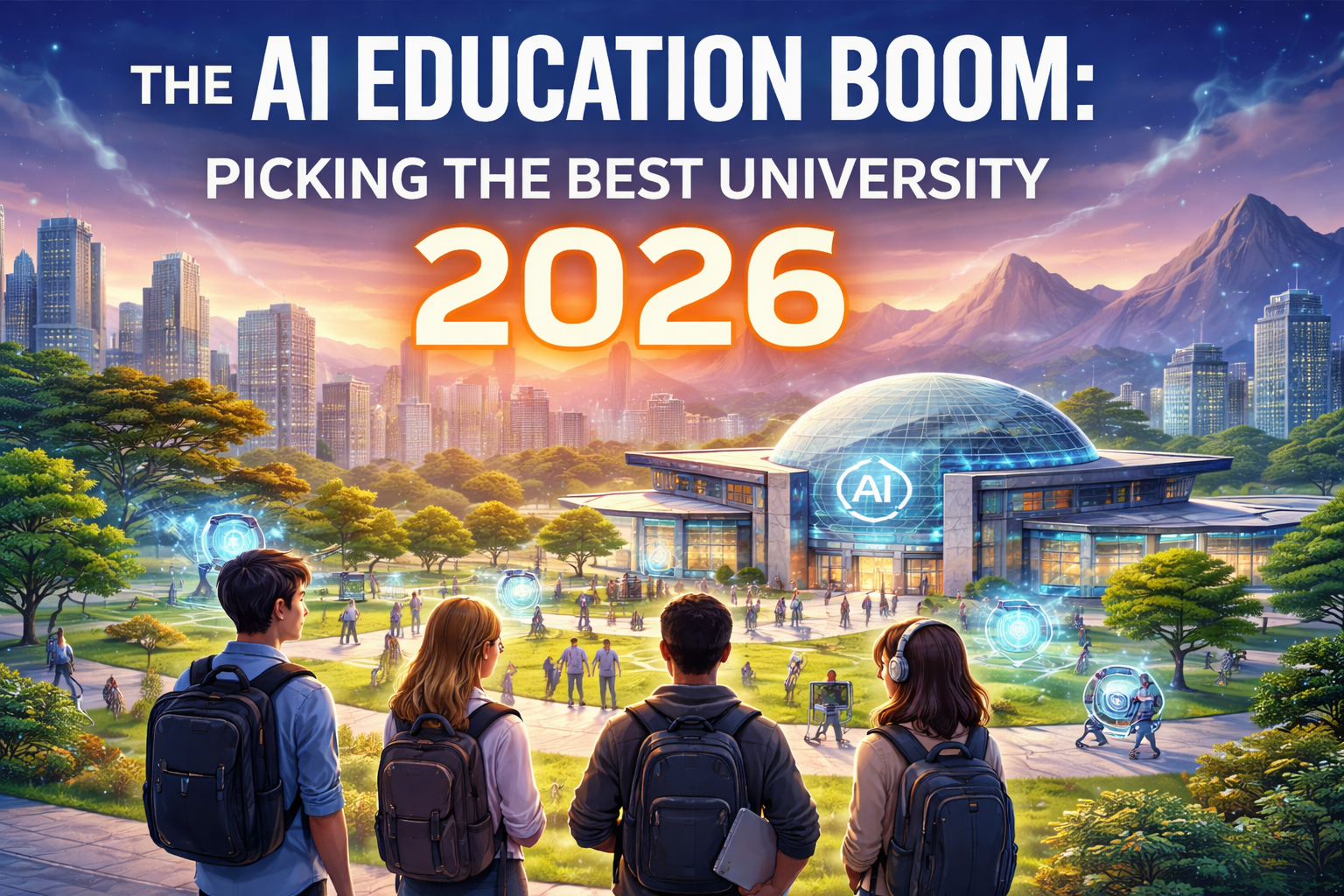
Artificial Intelligence (AI) has moved from science fiction into everyday life. From voice assistants and recommendation systems to self-driving technology and medical diagnostics, AI is transforming nearly every industry. Because of this rapid transformation, universities worldwide are expanding their AI-related programs to meet the growing demand for skilled professionals. As we move into 2026, students who want to build a successful career in technology must carefully choose the right university that offers strong AI education and practical learning opportunities.
The Growing Importance of AI Education
The global demand for AI experts has increased significantly in the last decade. Companies are investing heavily in AI research, automation, and data-driven technologies. Organizations across sectors—including healthcare, finance, manufacturing, education, and e-commerce—are looking for professionals who understand machine learning, data science, and advanced computing.
To respond to this demand, universities have begun offering specialized degrees such as Artificial Intelligence, Machine Learning, Data Science, and Robotics. In 2026, AI education is no longer limited to computer science departments. Many universities are integrating AI into business, engineering, healthcare, and even social science programs. This interdisciplinary approach helps students understand how AI can solve real-world problems.
For students planning their higher education, this boom in AI programs creates both opportunity and confusion. With so many universities offering AI-related courses, it becomes essential to carefully evaluate which institution provides the best education and career prospects.
Understanding What Makes a Strong AI Program
Not all AI programs are the same. Some universities offer cutting-edge research and industry collaboration, while others provide only basic theoretical courses. When choosing the right university, students should first examine the structure and depth of the AI curriculum.
A strong AI program typically includes subjects such as machine learning, neural networks, deep learning, natural language processing, robotics, computer vision, and data analytics. In addition, modern programs also focus on AI ethics, responsible technology development, and the societal impact of artificial intelligence.
Universities that regularly update their curriculum to match industry trends help students stay relevant in a rapidly evolving field. Since AI technologies change quickly, programs that include practical projects and real-world case studies offer greater value.
Research Opportunities and Innovation
AI is one of the most research-driven fields in modern technology. Breakthroughs in machine learning algorithms, autonomous systems, and predictive analytics often originate from university research labs. Therefore, students should consider whether a university provides opportunities to participate in research activities.
Institutions with dedicated AI research centers, innovation labs, and funded research projects allow students to work alongside experienced professors and researchers. Participating in research not only strengthens technical knowledge but also improves problem-solving skills and critical thinking.
Many top universities also collaborate with technology companies to develop AI applications for industries such as healthcare diagnostics, smart cities, and financial forecasting. These collaborations give students exposure to real-world challenges and innovative solutions.
Industry Connections and Internship Opportunities
Another important factor when choosing an AI university is the strength of its industry connections. Universities that maintain partnerships with technology companies often provide internships, industry workshops, and mentorship programs. These experiences help students understand how AI systems are developed and implemented in professional environments.
Internships are especially valuable because they allow students to gain hands-on experience while building professional networks. Many graduates secure full-time jobs through internships or industry collaborations during their studies.
In 2026, employers are increasingly looking for graduates who not only understand AI theory but can also apply it to real business problems. Universities that emphasize practical training, project development, and industry exposure give students a competitive advantage in the job market.
The Role of Faculty and Learning Environment
The quality of faculty members also plays a major role in the success of an AI program. Professors who are actively involved in AI research or have experience working in the technology industry can provide valuable insights beyond textbooks.
Experienced faculty members often guide students through complex topics, supervise research projects, and help them develop innovative solutions. In addition, universities with a collaborative learning environment—where students can participate in coding competitions, hackathons, and AI workshops—create a culture of creativity and innovation.
Facilities, Technology, and Infrastructure
AI development requires powerful computing resources, advanced software tools, and access to large datasets. Universities that invest in modern laboratories, high-performance computing systems, and specialized AI platforms provide students with the tools needed for experimentation and learning.
These facilities allow students to build machine learning models, train neural networks, and develop intelligent applications. Without proper technological infrastructure, even the best theoretical education may not fully prepare students for industry demands.
Global Exposure and Future Opportunities
AI is a global field, with researchers and professionals collaborating across borders. Universities that offer international exchange programs, global research partnerships, and multicultural learning environments can provide broader exposure to students.
Studying in such environments helps students understand different technological perspectives and prepares them for international careers. Networking with global peers and researchers can also open doors to future collaborations and job opportunities.
Preparing for the AI-Driven Future
The AI education boom is expected to continue for many years. Experts predict that by the end of the decade, millions of new jobs will require skills related to artificial intelligence, automation, and data analysis. Students who invest in the right education today will be better prepared to lead the technological innovations of tomorrow.
However, choosing the best university is not just about rankings or popularity. Students should focus on factors such as program quality, research opportunities, industry partnerships, faculty expertise, and technological infrastructure.
Final Thoughts
The rise of AI has created one of the most exciting educational opportunities of the modern era. For students planning their future in 2026, selecting the right university is a critical decision that can shape their career path.
By choosing an institution that offers strong AI programs, practical learning experiences, and connections to the technology industry, students can position themselves at the forefront of the AI revolution. With the right education and dedication, they will be ready to build innovative technologies, solve complex global challenges, and lead the next generation of digital transformation. 🤖🚀🎓